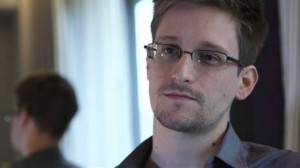
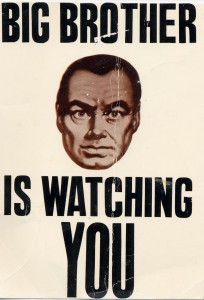
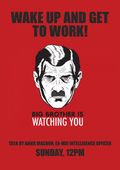
In the wake of the Edward Snowden disclosures about endemic global surveillance, the rather threadbare old argument about “if you have done nothing wrong and have nothing to hide, you have nothing to fear” has been trotted out by many Big Brother apologists.
But it’s not about doing anything wrong, it’s about having an enshrined right to privacy — as recognised in the Universal Declaration of Human Rights agreed in 1948. And this was enshrined in the wake of the horrors of World War 2, and for very good reason. If you are denied privacy to read or listen, if you are denied privacy to speak or write, and if you are denied privacy about whom you meet and see, then freedom has died and totalitarianism has begun.
Those were the lessons learned from the growth of fascism in the 1930s and 1940s. If you lose the right to privacy, you also lose the ability to push back against dictatorships, corrupt governments, and all the attendant horrors.
How quickly we forget the lessons of history: not just the rights won over the last century, but those fought and died for over centuries. We recent generations in the West have grown too bloated on ease, too financially fat and socially complacent, to fully appreciate the freedoms we are casually throwing away.
 So what sparked this mini-rant? This article I found in my Twitter stream (thanks @LossofPrivacy). It appears that a US police department in Detroit has just sent out all the traditionally vital statistics of its female officers to the entire department — weight, height and even the bra size of individual female police officers have been shared with the staff, purely because of an email gaffe.
Well people make mistakes and hit the wrong buttons. So this may not sound like much, but apparently the women in question are not happy, and rightly so. In the still macho environment of law enforcement, one can but cringe at the “joshing” that followed.
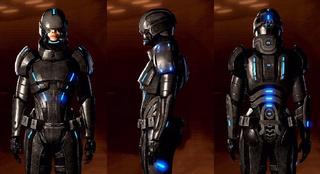
Putting aside the obvious question of whether we want our police officers to be tooled up like Robocop, this minor débâcle highlights a key point of privacy. It’s not that one needs to hide one’s breasts as a woman — they are pretty much obvious for chrissakes — but does everyone need to know the specifics, or is that personal information one step too far? And as for a woman’s weight, don’t even go there.….
So these cops in Detroit, no doubt all up-standing pillars of their communities, might have learned a valuable lesson. It is not a “them and us” situation — the “them” being “terrorists”, activists, communists, liberals, Teabaggers — whatever the theme du jour happens to be.
It is about a fundamental need for privacy as human beings, as the Duchess of Cambridge also discovered last year. This is not just about height, bra size or, god forbid, one’s weight. This is about bigger issues if not bigger boobs. We all have something we want kept private, be it bank statements, bonking, or bowel movements.
However, with endemic electronic surveillance, we have already lost our privacy in our communications and in our daily routines — in London it is estimated that we are caught on CCTV more than 300 times a day just going about our daily business.
More importantly, in this era of financial, economic and political crises, we are losing our freedom to read and watch, to speak and meet, and to protest without fear of surveillance. It is the Stasi’s wet dream, realised by those unassuming chaps (and obviously the chapesses with boobs) in law enforcement, the NSA, GCHQ et al.
But it is not just the nation state level spies we have to worry about. Even if we think that we could not possibly be important enough to be on that particular radar (although Mr Snowden has made it abundantly clear that we all are), there is a burgeoning private sector of corporate intelligence companies who are only too happy to watch, infiltrate and destabilise social, media and protest groups. “Psyops” and “astro-turfing” are terrifying words for anyone interested in human rights, activism and civil liberties. But this is the new reality.
So, what can we do? Let’s remember that most law enforcement people in the varied agencies are us — they want a stable job that feels valued, they want to provide for their families, they want to do the right thing. Reach out to them, and help those who do have the courage to speak out and expose wrongdoing, be it law enforcement professionals speaking out against the failed “war on drugs” (such as those in LEAP) or intelligence whistleblowers exposing war crimes, illegal surveillance and torture.
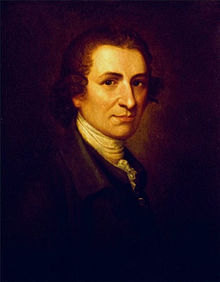 But also have the courage to protest and throw the tired old argument back in the faces of the security proto-tyrants. This is what the founding fathers of the USA did: they risked being hanged as traitors by the British Crown in 1776, yet they still made a stand. Using the “seditious” writings of Tom Paine, who ended up on the run from the UK, they had the courage to speak out, meet up and fight for what they believed in, and they produced a good first attempt at a workable democracy.
Unfortunately, the USA establishment has long been corrupted and subverted by corporatist interests. And unfortunately for the rest of the world, with the current geo-political power balance, this still has an impact on most of us, and provides a clear example of how the changing political landscape can shift the goal posts of “acceptable” behaviour — one day your are an activist waving a placard, the next you are potentially deemed to be a “terrorist”.
But also remember — we are all, potentially, Tom Paine. And as the endless, nebulous, and frankly largely bogus “war on terror” continues to ravage the world and our democracies, we all need to be.
In this post-PRISM world, we need to take individual responsibility to protect our privacy and ensure we have free media. At least then we can freely read, write, speak, and meet with our fellow citizens. We need this privacy to be the new resistance to the creeping totalitarianism of the global elites.
Read the seminal books of Tom Paine (while you still can), weep, and then go forth.….
With thanks to my mother for the title of this piece. It made me laugh.