A few minutes after Julian Assange was scandalously arrested and dragged out of the Ecuadorian Embassy in London last week, I was contacted by RT.com to do an interview. While further comments will follow, here are my initial thoughts:
Category Archives: Police
UK and EU Security
A couple of recent interviews about the themes of UK and EU security, going forward.
Europe_and_the_current_security_situation from Annie Machon on Vimeo.
And:
Post_Brexit_UK_EU_Security from Annie Machon on Vimeo.
Thought police
Here is the full interview I did recently for RT about the announcement of a new section of the UK Metropolitan Police dedicated to hunting down “internet trolls”.
And here is the clip used in the interview:
Thought Police from Annie Machon on Vimeo.
War on Drugs has failed — ENCOD Article
Below is an article I recently wrote for the excellent European drug policy reform organisation, European Coalition for Just and Effective Drug Policies — ENCOD. And here is the link to the original on the ENCOD website.
I have had the honour of serving as the European Director of Law Enforcement Against Prohibition (LEAP) for the last four years, and have been thrilled to oversee the establishment of thriving national groups in the UK and Germany, with the possibility of more on the horizon. In my view, law enforcement offers a unique and critical voice to the international drug policy reform debate.
LEAP, founded in 2002, today has over 150,000 supporters and speakers in 20 countries. We consist of police officers, lawyers, judges, prison governors, probation officers, intelligence and military personnel, and even international drug czars. What unites us is a shared professional knowledge, experienced across the full spectrum of law enforcement, that drug prohibition has egregiously failed.
Over the last 50 years global drug use has exponentially increased, the potency of illegal drugs has increased, they are ubiquitously available, and the price of street drugs has gone through the floor. Faced with this information, how can our governments claim they are winning the “war on drugs” to create a “drug free world”?
Quite the opposite – prohibition has enabled a global and exponentially growing black market.
I became aware of drug prohibition failure while I was working for MI5 back in the 1990s. One of my postings involved investigating terrorist logistics, which meant that I had to work closely with UK Customs across the UK. This experience made me aware that the “war” had been lost. It also made me very aware, early on, that there was a massive overlap between the illegal drug market and terrorist funding.
The US DEA estimates that over half the designated terrorist groups around the world gain the bulk of their funding from drugs money. So on the one hand prohibiting drugs and fighting the “war on drugs” sends the market underground and the resulting massive profits provide a key revenue stream to terrorists, not least ISIS which controls part of the flow of heroin from central Asia into Europe. On the other hand the West is also waging the “war on terror” to fight these same groups.
So what our governments give the military-security complex with one hand, they also give with the other.
But is not all bad news. Countries in Latin America and states in North America are legalising cannabis, safe injection rooms have rolled out across Europe, Canada is looking to legalise cannabis, and the decriminalisation of drugs has been hugely successful in countries such as Portugal and the Czech Republic.
Even at the UN level, which recently held a once-in-a-generation General Assembly Special Session in New York, the concept of harm reduction is at least now being tabled by some countries, although the progress is glacial.
The times may not be changing fast enough for many of us in the drug policy reform world, despite baby steps being made in the right direction by some countries. Yet even the more progressive countries within the international community are still constrained by the legal straight jacket that is the UN drug treaty framework.
And while harm reduction is good progress in that it no longer criminalises those who choose to use, it utterly fails to address the bigger problem that I mentioned before: that the criminalisation of certain drugs drives the market underground, providing huge profits to organised crime cartels and terrorist groups around the world every year. Prohibition has unleashed the biggest crime wave the world has ever seen. As with alcohol prohibiton in 20th century America, only legalisation and regulation will remove this market from the greedy grasp of criminals.
I have just watched a old BBC Newsnight debate between comedian and actor, Russell Brand, and right-wing writer and commentator, Peter Hitchens. The debate encapsulated the entrenched positions of both the reformist and prohibitionist camps. The former was represented by Brand, a former drug user in recovery, advocating abstinence-based therapy. The latter by Hitchens, an anti-drug warrior largely approaching the issue from a morality position, who argued that taking drugs is a crime and that all such crimes should be prosecuted as a deterrence.
While naturally I lean more towards the position of Brand, who two years ago electrified a rather turgid annual UN Commission on Narcotic Drugs meeting in Vienna by calling for full drug legalisation, and also while respecting his personal experiences, I do think he’s missing a trick.
Yes, those with drug dependencies need help and compassion not prison, but the vast majority of those who choose to use do so recreationally, just for fun, and never develop an addiction, just as only a minority of those who choose to drink go on to develop alcoholism. And yet the parameters of the drug debate rarely stray beyond the well-worn issue of “problem” users, both amongst reformist as well as prohibitionist circles. We do not call all drinkers alcoholics so why, in the public discourse, are all users of other drugs clumped together as “addicts” in high-profile debates?
As for Hitchens, I remain baffled. He seems to think that all laws are immutable, graven in stone with words from on high, and as such must therefore be strictly enforced. This is tosh. All laws change and evolve to reflect the changing mores of the societies which write them. If this were not to happen, we in the West would still burn witches, own slaves, not allow women to vote, outlaw homosexuality and, in America of course, alcohol would remain prohibited. Yet now, all these outdated, unjust, and cruel laws have been swept away,
In 2014 LEAP published a Proposed Amendment of the UN Treaties, in which we argue that all drugs should be brought within the orbit of the World Health Organisation Framework Convention on Tobacco Control (2003). We argue that only full regulation and control of the drug market will end the scourge of the illegal global drug trade. Until this happens at least $320 billion per year profits will continue to benefit only crime cartels and terrorist organisations.
The “war on drugs” has failed.
Albert Einstein, who was not exactly a dullard, said that the very definition of insanity was to continue to do the same thing, even if it repeatedly fails, in the hope that you will eventually get a different outcome. That is what we are seeing with prohibition.
It is time for this insanity to cease.
Karma Police
As I type this I am listening to one of my all-time favourite albums, Radiohead’s seminal “OK, Computer”, that was released in spring 1997. The first time I heard it I was spellbound by its edginess, complexity, experimentalism and political overtones. My partner at the time, David Shayler, took longer to get it. Self-admittedly tone deaf, he never understood what he laughingly called the “music conspiracy” where people just “got” a new album and played it to death.
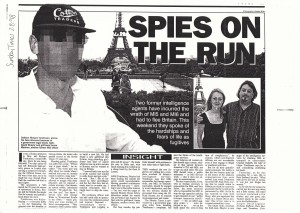 His opinion changed drastically over the summer of ’97 after we had blown the whistle on a series of crimes committed by the UK’s spy agencies. As a result of our actions — the first reports appeared in the British media on 24 July 1997 — we had fled the country and gone on the run around Europe for a month. At the end of this surreal backpacking holiday I returned to the UK to face arrest, pack up our ransacked home, and try to comfort our traumatised families who had known nothing of our whistleblowing plans.
“OK, Computer” was the soundtrack to that month spent on the run across the Netherlands, Belgium, France and Spain. Taking random trains, moving from hotel to hotel, and using false names, our lives were dislocated and unreal. So in each hotel room we tried to recreate a sense of homeliness — some candles, a bottle of wine, natch, and some music. In the two small bags, into which I had packed the essentials for our unknown future life, I had managed to squeeze in my portable CD player (remember those?), tiny speakers and a few cherished CDs. Such are the priorities of youth.
The joy of Radiohead broke upon David during that month — particularly the track “Exit Music (for a Film)”, which encapsulated our feelings as we fled the UK together. Once we were holed up in a primitive French farmhouse for the year after our month on the run, this was the album that we listened to last thing at night, holding onto each other tightly to ward off the cold and fear. Revelling in the music, we also drew strength from the dissident tone of the lyrics.
So it was with some mirthful incredulity that I yesterday read on The Intercept that GCHQ named one of its most iniquitous programmes after one of the classic songs from the album — “Karma Police”.
In case you missed this, the basic premise of GCHQ was to develop a system that could snoop on all our web searches and thereby build up a profile of each of our lives online — our interests, our peccadilloes, our politics, our beliefs. The programme was developed between 2007 and 2008 and was deemed functional in 2009. Who knows what information GCHQ has sucked up about you, me, everyone, since then?
As I have said many times over the years since Snowden and who knows how many others began to expose the out-of-control spy agencies, this is disproportionate in soi-disant democracies. It is certainly not lawful by any stretch of the imagination. UK governmental warrants — which are supposed to regulate and if necessary circumscribe the activities of the spy snoopers — have repeatedly been egregiously abused.
They are supposed to make a case for targeted surveillance of people suspected of being a threat to the UK’s national security or economic well-being. The warrants, blindly signed by the Home or Foreign Secretary, are not designed to authorise the industrial interception of everyone’s communications. This is a crime, plain and simple, and someone should be held to account.
Talking of crimes, after a month on the run with David, I returned (as I had always planned to do) to the UK. I knew that I would be arrested, purely on the grounds that I had been an MI5 officer and was David Shayler’s girlfriend and had supported his whistleblowing activities. In fact my lawyer, John Wadham who was the head of the UK’s civil liberties union, Liberty, had negotiated with the police for my return to the UK and to hand myself into the police for questioning. He flew out to Barcelona to accompany me back to the UK almost exactly eighteen years ago today.
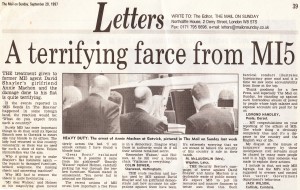 Despite the pre-agreements, I was arrested at the immigration desk at Gatwick airport by six burly Special Branch police officers and then driven by them up to the counter-terrorism interview room in Charing Cross police station in central London, where I was interrogated for the maximum six hours before being released with no charge.
The music playing on the radio during this drive from the airport to my cell? Radiohead’s “Karma Police”.
One can but hope that karma will come into play. But perhaps the ending of “Exit Music…” is currently more pertinent — we hope that you choke, that you choke.….
After all, the spies do seem to be choking on an overload of hoovered-up intelligence — pretty much every “ISIS-inspired” attack in the west over the last couple of years has reportedly been carried out by people who have long been on the radar of the spies. Too much information can indeed be bad for our security, our privacy and our safety.
Re:publica — The War on Concepts
This week I made my first visit to the re:publica annual geekfest in Berlin to do a talk called “The War on Concepts”. In my view this, to date, includes the four wars — on drugs, terror, the internet, and whistleblowers. No doubt the number will continue to rise.
Here’s the video:
republica_2015_Annie_Machon_The_War_on_Concepts from Annie Machon on Vimeo.
Niemoeller Redux
Published on RT Op Edge and Consortium News.
I regularly revisit the famous Pastor Martin Niemoeller poem from the Nazi era as his words remain resonant in our post‑9/11, “war on terror” world. Over the last week threads of various alarming stories have converged, so here is my latest update:
First they came for the Muslims, but I was not a Muslim so did not speak up.
Then they came for the whistleblowers, but I was not a whistleblower so did not speak up.
Then they came for the “domestic extremists”, but I was not an activist so did not speak up.
And when they came for me, there was nobody left to speak up for me.
Allow me to explain this current version. Regular readers of this website will be well aware of my horror at the global rape of basic human rights in the West’s fight against the “war on terror” since 9/11: the kidnappings, the torture, the CIA presidentially-approved weekly assassination lists, the drone bombings, the illegal wars.…
All these measures have indeed targeted and terrorised the Muslim community around the world. In the UK I have heard many stories of British Muslims wary of attending a family event such as a wedding of their cousins in Pakistan or wherever, in case they get snatched, tortured or drone bombed.
Now it appears that even British citizens who choose to donate to UK charities offering humanitarian relief in war zones such as Syria can be arrested under counter-terrorism laws.
 Moazzam Begg, the director of Cage (the UK NGO campaigning about the community impact of the war on terror) was again seized last week. As I have written before, this is a man who has already experienced the horrors of Bagram airbase and Guantanamo. When he was released he became a campaigner for others in the same plight and set up the Cage campaign which has gained quite some traction over the last few years.
Over a year ago he visited Syria on a fact-finding mission, investigating those who had been summarily detained and tortured in the conflict. Last December he had his passport seized on spurious grounds He wrote about this trip quite openly, and yet now, a year on, has been arrested and charged with “training terrorists and fund raising” in Syria. This is a high-profile campaigner who operates in the full glare of the media. How credulous does one have to be to believe that Begg, after all his experiences and running this campaign, is now involved in “terrorism”? Really, anyone?
Since then other people involved in British charities offering aid to the displaced peoples of Syria have also been scooped up. But this is just affecting the British Muslim community, right? There’s “no smoke without fire”, and it does not impinge the lives of most people in the UK, so there has been no widespread outcry.…
.…so nobody speaks up.
Then we have the ongoing “war on whistleblowers” that I have discussed extensively. This affects every sector of society in every country, but most seriously affects whistleblowers emerging from central government, the military and the intelligence agencies. They are the ones most likely to witness the most heinous crimes, and they are the ones automatically criminalised by secrecy laws.
This is most apparent in the UK, where the Official Secrets Act (1989) specifically criminalises whistleblowing, and in the USA, where President Obama has invoked the 1917 Espionage Act against whistleblowers more times than all other presidents combined over the last century. If that is not a “war on whistleblowers”, I don’t know what is.
This, of course, is a paranoid over-reaction to the work of Wikileaks, and the brave actions of Chelsea Manning and Edward Snowden. This is what Obama’s government deems to be the “insider threat”. Yet it is only through greater transparency that we can operate as informed citizens; it is only through greater accountability that we can hope to obtain justice. And in this era, when we are routinely lied into illegal wars, what could be more important?
But intelligence and military whistleblowers are rare, specialised and easy to stigmatise as the “other” and now, the insider threat — not quite of the normal world. The issues they disclose can seem a bit remote, not linked to most people’s daily experiences.…
.…so nobody speaks up.
But now to my third revamped line of the Pastor Niemoeller poem: the activists or, to use current police terminology, the “domestic extremists”. This, surely, does impinge on more people’s experience of life. If you want to go out and demonstrate against a war, in support of Occupy, for the environment, whatever, you are surely exercising your democratic rights as citizens, right?
Er, well no, not these days. I have written before about how activists can be criminalised and even deemed to be terrorists by the police (think London Occupy in 2011 here). I’m thinking of the ongoing British undercover cop scandal which continues to rumble on.
For those of you outside the UK, this is a scandal that erupted in 2010. There is was a section of secret police who were infiltrated into activist groups under secret identities to live the life, report back, and even potentially work as enablers or agents provocateurs. As the scandal has grown it appears that some of these cops fathered children with their targets and spied on the grieving families of murder victims.
This sounds like the East German Stasi, but was happening in the UK in the last couple of decades. A government enquiry has just been announced and many old cases against activists will be reviewed to see if tarnished “evidence” was involved in the trials and subsequent convictions.
But again this does not affect most people beyond the activist community.…
.…so nobody speaks up.
 Now, people who have always assumed they have certain protections because of their professions, such as lawyers and journalists, are also being caught in this dragnet. Julian Assange’s lawyer, Jennifer Robinson, discovered she was on a flight watch list a few years ago. More recently Jesselyn Radack, human rights director of the US Government Accountability Project and legal advisor to Edward Snowden, was stopped and interrogated at the UK border.
And just this week a Dutch investigative journalist, Brenno de Winter, was unable to do his job since his name was placed on alert in all national government buildings. The police accused him of hacking-related crimes and burglary. They had to retract this when the smear campaign came to light.
Brenno has made his name by freedom of information requests from the Dutch public sector and his subsequent investigations, for which he was named Dutch Journalist of the Year in 2011. Hardly subversion, red in tooth and claw, but obviously now deemed to be an existential, national security threat to the Netherlands.
Nor is this a Dutch problem — we have seen this in the US, where journalists such as James Risen and Barrett Brown have been hounded merely for doing their jobs, and the Glenn Greenwald’s partner, David Miranda, was detained at London Heathrow airport under counter-terrorism laws.
Journalists, who always somewhat complacently thought they had special protections in Western countries, are being increasingly targeted when trying to report on issues such as privacy, surveillance, whistleblower disclosures and wars.
Only a few are being targeted now, but I hope these cases will be enough to wake the rest up, while there is still the chance for them to take action.…
.…before there is nobody left to speak up for us.
LEAP talk at Akzept drug conference in Bielefeld
Here’s a talk I did last week at the international Akzept Conference in Bielefeld about prohibition and the failed “war on drugs”:
Akzept Kongress 2013 from Annie Machon on Vimeo.
International Day of Privacy, Berlin Demo
The International Day of Privacy was celebrated globally on 31 August, with the cases of Chelsea Manning and Edward Snowden bringing extra energy and resonance to the subject.
I was invited take part in a demonstration in Berlin, culminating with a talk at the hugely symbolic Brandenburg Gate. Here’s the talk:
Another abuse of UK terrorism laws
First published on RT Op-Edge.
David Miranda had just spent a week in Berlin, before flying back to his home country, Brazil, via London’s Heathrow airport. As he attempted to transit on to his flight home — not enter the UK, mind you, just make an international connection — he was pulled to one side by the UK’s border security officers and questioned for nine hours, as well as having all his technical equipment confiscated.
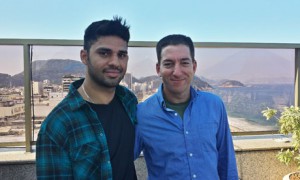 He was detained for the maximum period allowed under the draconian terms of Schedule 7 of the UK’s Terrorism Act (2000). His apparent “crime”? To be the partner of campaigning journalist Glenn Greenwald who broke the Edward Snowden whistleblowing stories.
Miranda’s detention has caused outrage, rightly, around the world. Diplomatic representations have been made by the Brazilian government to the British, UK MPs are asking questions, and The Guardian newspaper (which is the primary publisher of Greenwald’s stories), has sent in the lawyers.
This episode is troubling on so many levels, it is difficult to know where to begin.
 Firstly, the Terrorism Act (2000) is designed to investigate, er, terrorism — at least, so you would think. However it is all too easy for mission creep to set in, as I have been saying for years. The definition of terrorism has expanded to cover activists, placard wavers, and protesters as well as, now apparently, the partners of journalists. The old understanding of due legal process is merely yet another quaint, British artefact like the Magna Carta and habeas corpus.
In the UK we now have secret courts covering all things “national security”, we have pervasive Big Brother surveillance as exemplified by GCHQ’s TEMPORA programme, and we have our spies involved in kidnapping and torture.
So Schedule 7 of the Terrorism Act is just another small nail in the coffin of historic British freedoms. Under its terms, anyone can be pulled aside, detained and questioned by border security guards if they are “suspected of” involvement in, the commissioning of, or financial support for terrorism. The detainee is not allowed to speak to a lawyer, nor are they allowed not to answer questions, on pain of criminal prosecution. Plus their property can be indefinitely seized and ransacked, including computers, phones, and other gadgets.
Under Schedule 7 people can be questioned for a maximum of 9 hours. After that, the authorities either have to apply for a formal extension, charge and arrest, or release. According to a UK government document, 97% people are questioned for less than 1 hour then released and only 0.06% are held for six hours. Miranda was held up until the last minute of the full nine hours before being released without charge.
Secondly, this abuse of power displays all too clearly the points that Edward Snowden has disclosed via Greenwald about a burgeoning and out-of-control surveillance state. The detention of Miranda displays all the obsessive vindictiveness of a wounded secret state that is buzzing around, angry as a wasp. Snowden has the protection of the only state currently with the power to face down the brute might of US “diplomacy”, and Greenwald still has the shreds of journalist protections around him.
Friends and partners, however, can be seen as fair game.
I know this from bitter personal experience. In 1997 former MI5 intelligence officer, David Shayler, blew the whistle on a whole range of UK spy crimes: files on government ministers, illegal phone taps, IRA bombs that could have been prevented, innocent people in prison, and an illegal MI6 assassination plot against Gaddafi, which went wrong and innocent people died.
Working with a major UK newspaper and with due respect for real national secrets, he went public about these crimes. Pre-emptively we went on the run together, so that we could remain free to argue about and campaign around the disclosures, rather than disappearing into a maximum security prison for years. After a month on the run across Europe, I returned to the UK to work with our lawyers, see our traumatised families, and pack up our smashed-up, police-raided flat.
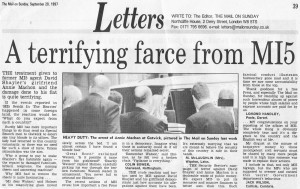 In September 1997 I flew back with my lawyer from Spain to London Gatwick. I knew that the Metropolitan Police Special Branch wanted to interview me, and my lawyer had negotiated this ahead of my travel. Despite this, I was arrested at the immigration desk by six heavies, and carted off to a counter-terrorism suite at Charing Cross police station in central London, where I was interrogated for six hours.
At that point I had done nothing more than support David. As another ex-MI5 officer I agreed that the spies needed greater oversight and accountability, but actually my arrest was because I was his girlfriend and going after me would be leverage against him. But is got worse — two days later Shayler’s two best friends and his brother were arrested on flagrantly trumped-up charges. None of us was ever charged with any crime, but we were all kept on police bail for months.
Looking back, our treatment was designed to put more pressure on him and “keep him in his box” — it was pure intimidation. Journalists and students were also threatened, harassed, and in one case charged and convicted for having the temerity to expose spy crimes disclosed by Shayler. To this day, none of the criminals in the UK intelligence agency has ever been charged or convicted.
So the threats and intimidation around the Snowden case, and the detention of Greenwald’s partner, are old, old tactics. What is new is the sheer scale of blatant intimidation, the sheer brutish force. Despite the full glare of global internet and media coverage, the US and UK spooks still think they can get away with this sort of intimidation. Will they? Or will we, the global citizenry, draw a line in the sand?
Oh, and let’s not forget the sheer hypocrisy as well — the US condemns Snowden for seeking refuge in Russia, and castigates that country for its civil rights record on certain issues. Be that as it may, the US establishment should look to the log in its own eye first — that one of its young citizens faces the death sentence or life-long incarceration for exposing (war) crimes against the global community as well as the country’s own constitution.
There is an internationally-recognised legal precedent from the Nuremburg Nazi trials after World War 2: “just following orders” is not a defence under any law, particularly when those orders lead to victimisation, war crimes and genocide. The UK border guards, as well as the international intelligence communities and military, would do well to heed that powerful lesson from history.
So this overzealous use of a law to detain the partner of a journalist merely travelling through the UK should make us all pause for thought. The West has long inveighed against totalitarian regimes and police states. How can they not recognise what they have now become? And how long can we, as citizens, continue to turn a blind eye?
Keeping Abreast of Privacy Issues
In the wake of the Edward Snowden disclosures about endemic global surveillance, the rather threadbare old argument about “if you have done nothing wrong and have nothing to hide, you have nothing to fear” has been trotted out by many Big Brother apologists.
But it’s not about doing anything wrong, it’s about having an enshrined right to privacy — as recognised in the Universal Declaration of Human Rights agreed in 1948. And this was enshrined in the wake of the horrors of World War 2, and for very good reason. If you are denied privacy to read or listen, if you are denied privacy to speak or write, and if you are denied privacy about whom you meet and see, then freedom has died and totalitarianism has begun.
Those were the lessons learned from the growth of fascism in the 1930s and 1940s. If you lose the right to privacy, you also lose the ability to push back against dictatorships, corrupt governments, and all the attendant horrors.
How quickly we forget the lessons of history: not just the rights won over the last century, but those fought and died for over centuries. We recent generations in the West have grown too bloated on ease, too financially fat and socially complacent, to fully appreciate the freedoms we are casually throwing away.
 So what sparked this mini-rant? This article I found in my Twitter stream (thanks @LossofPrivacy). It appears that a US police department in Detroit has just sent out all the traditionally vital statistics of its female officers to the entire department — weight, height and even the bra size of individual female police officers have been shared with the staff, purely because of an email gaffe.
Well people make mistakes and hit the wrong buttons. So this may not sound like much, but apparently the women in question are not happy, and rightly so. In the still macho environment of law enforcement, one can but cringe at the “joshing” that followed.
Putting aside the obvious question of whether we want our police officers to be tooled up like Robocop, this minor débâcle highlights a key point of privacy. It’s not that one needs to hide one’s breasts as a woman — they are pretty much obvious for chrissakes — but does everyone need to know the specifics, or is that personal information one step too far? And as for a woman’s weight, don’t even go there.….
So these cops in Detroit, no doubt all up-standing pillars of their communities, might have learned a valuable lesson. It is not a “them and us” situation — the “them” being “terrorists”, activists, communists, liberals, Teabaggers — whatever the theme du jour happens to be.
It is about a fundamental need for privacy as human beings, as the Duchess of Cambridge also discovered last year. This is not just about height, bra size or, god forbid, one’s weight. This is about bigger issues if not bigger boobs. We all have something we want kept private, be it bank statements, bonking, or bowel movements.
However, with endemic electronic surveillance, we have already lost our privacy in our communications and in our daily routines — in London it is estimated that we are caught on CCTV more than 300 times a day just going about our daily business.
More importantly, in this era of financial, economic and political crises, we are losing our freedom to read and watch, to speak and meet, and to protest without fear of surveillance. It is the Stasi’s wet dream, realised by those unassuming chaps (and obviously the chapesses with boobs) in law enforcement, the NSA, GCHQ et al.
But it is not just the nation state level spies we have to worry about. Even if we think that we could not possibly be important enough to be on that particular radar (although Mr Snowden has made it abundantly clear that we all are), there is a burgeoning private sector of corporate intelligence companies who are only too happy to watch, infiltrate and destabilise social, media and protest groups. “Psyops” and “astro-turfing” are terrifying words for anyone interested in human rights, activism and civil liberties. But this is the new reality.
So, what can we do? Let’s remember that most law enforcement people in the varied agencies are us — they want a stable job that feels valued, they want to provide for their families, they want to do the right thing. Reach out to them, and help those who do have the courage to speak out and expose wrongdoing, be it law enforcement professionals speaking out against the failed “war on drugs” (such as those in LEAP) or intelligence whistleblowers exposing war crimes, illegal surveillance and torture.
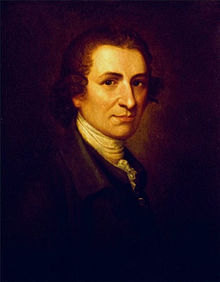 But also have the courage to protest and throw the tired old argument back in the faces of the security proto-tyrants. This is what the founding fathers of the USA did: they risked being hanged as traitors by the British Crown in 1776, yet they still made a stand. Using the “seditious” writings of Tom Paine, who ended up on the run from the UK, they had the courage to speak out, meet up and fight for what they believed in, and they produced a good first attempt at a workable democracy.
Unfortunately, the USA establishment has long been corrupted and subverted by corporatist interests. And unfortunately for the rest of the world, with the current geo-political power balance, this still has an impact on most of us, and provides a clear example of how the changing political landscape can shift the goal posts of “acceptable” behaviour — one day your are an activist waving a placard, the next you are potentially deemed to be a “terrorist”.
But also remember — we are all, potentially, Tom Paine. And as the endless, nebulous, and frankly largely bogus “war on terror” continues to ravage the world and our democracies, we all need to be.
In this post-PRISM world, we need to take individual responsibility to protect our privacy and ensure we have free media. At least then we can freely read, write, speak, and meet with our fellow citizens. We need this privacy to be the new resistance to the creeping totalitarianism of the global elites.
Read the seminal books of Tom Paine (while you still can), weep, and then go forth.….
With thanks to my mother for the title of this piece. It made me laugh.
The Secret Policemen’s Balls-Up
First published on RT Op-Edge, with the slightly more circumspect title: “British police secretly operated outside democratic control for years”. Also on HuffPo UK.
In the wake of the global impact of the ongoing Edward Snowden saga, a smaller but still important whistleblower story flared and faded last week in the UK media.
Peter Francis revealed that 20 years ago he had worked as an undercover cop in the Metropolitan Police Force’s secret Special Demonstrations Squad (SDS) section. In this role, Francis stated that he was tasked to dig up dirt with which the Met could discredit the family of murdered black teenager, Stephen Lawrence and thereby derail their campaign for a full and effective police investigation into his death. The Lawrence family correctly believed that the original investigation had been fumbled because of institutional police racism at that time.
The fact that secret police were posing as activists to infiltrate protest groups will come as no shock after the cascade of revelations about secret policemen in 2011, starting with DC Mark Kennedy/environmental activist “Mark Stone”. Kennedy was uncovered by his “fellow” activists, and nine more quickly emerged in the wake of that scandal. This has resulted in an enquiry into the shadowy activities of these most secret officers, accusations that the Crown Prosecution Service suppressed key evidence in criminal trials, and a slew of court cases brought by women whom these (predominantly male) police officers seduced.
But the disclosures of Peter Francis plumb new depths. In the wake of the Stephen Lawrence murder, many left-wing and anti-Nazi groups jumped on the bandwagon, organising demonstrations and provoking confrontations with the far-right British National Party. There was a clash near the BNP’s bookshop in south London in 1993. So, sure, the Met Police could potentially just about argue that the undercover officers were trying to gather advance intelligence to prevent public disorder and rioting, although the sheer scale of the operation was utterly disproportionate.
However, what is completely beyond the Pale is this apparent attempt to smear the traumatised family of a murder victim in order to derail their campaign for justice.
The role of undercover cops spying on their fellow citizens who are politically active is distasteful in a democracy. And the fact that, until the original scandal broke in 2011, the reconstituted SDS continued to target peace and environmental protest groups who offered no threat whatsoever to national security is disgraceful — it smacks of the Stasi in East Germany.
To make matters even worse, when details emerged two years ago, it became apparent that the SDS Version 2.0 was operating outside the formal hierarchy of the police, with what little democratic oversight that would provide. In fact, it emerged that the SDS been renamed the National Public Order Intelligence Unit (NPOIU) and had for years been the private fiefdom of a private limited company — the Association of Chief Police Officers (ACPO). Within a notional democracy, this is just gobsmacking.
So how did this mess evolve?
From the late 19th century the Metropolitan Police Special Branch investigated terrorism while MI5, established in 1909, was a counter-intelligence unit focusing on espionage and political “subversion”. The switch began in 1992 when Dame Stella Rimington, then head of MI5, effected a Whitehall coup and stole primacy for investigating Irish terrorism from the Met. As a result MI5 magically discovered that subversion was not such a threat after all – this revelation only three years after the Berlin Wall came down – and transferred all its staff over to the new, sexy counter-terrorism sections. Since then, MI5 has been eagerly building its counter-terrorism empire, despite this being more obviously evidential police work.
Special Branch was relegated to a supporting role, dabbling in organised crime and animal rights activists, but not terribly excited about either. Its prestige had been seriously dented. It also had a group of experienced undercover cops – known then to MI5 as the Special Duties Section – with time on their hands.
It should therefore come as little surprise that ACPO came up with the brilliant idea of using this skill-set against UK “domestic extremists”. It renamed the SDS as the NPOIU, which first focused primarily on potentially violent animal rights activists, but mission creep rapidly set in and the unit’s role expanded into peaceful protest groups. When this unaccountable unit was revealed it rightly caused an outcry, especially as the term “domestic extremist” is not recognised under UK law, and cannot legally be used as justification to aggressively invade an individual’s privacy because of their legitimate political beliefs and activism.
So, as the police become ever more spooky, what of MI5?
As I mentioned, they have been aggressively hoovering up the prestigious counter-terrorism work. But, despite what the Americans have hysterically asserted since 9/11, terrorism is not some unique form of “eviltude”. It is a crime – a hideous, shocking one, but still a crime that should be investigated, with evidence gathered, due process applied and the suspects on trial in front of a jury.
A mature democracy that respects human rights and the rule of law should not intern suspects or render them to secret prisons and torture them for years. And yet this is precisely what our spooks have been doing – particularly when colluding with their US counterparts.
Also, MI5 and MI6 have for years operated outside any realistic democratic oversight and control. Until this year, the remit of the Intelligence and Security Committee in Parliament has only covered the policy, administration and finance of the spies. Since the committee’s inception in 1994 it has repeatedly failed to meaningfully address more serious questions about the spies’ role, and has been repeatedly lied to by senior spies and police officers.
The spooks are effectively above the law, while at the same time protected by the draconian Official Secrets Act. This makes the abuses of the NPOIU seem almost quaint. So what to do? A good first step might be to have an informed discussion about the realistic threats to the UK. The police and spies huddle behind the protective phrase “national security”. But what does this mean?
The core idea should be safeguarding the nation’s integrity. A group of well-meaning environmental protesters should not even be on the radar. And, no matter how awful, the occasional terrorist attack is not an existential threat to the fabric of the nation in the way of, say, the planned Nazi invasion in 1940. Nor is it even close to the sustained bombing of government, infrastructure and military targets by the Provisional IRA in the 1970s-90s.
Only once we understand the real threats can we as a nation discuss the necessary steps to take to protect ourselves effectively; what measures should be taken, what liberties occasionally and legally compromised, and what democratic accountability exists to ensure that the security forces do not exceed their remit and work within the law.
It is only by going through this process that can we ensure such scandals as the secret police will remain firmly in the past. And in the wake not only of Peter Francis’s confessions but the sheer scale of the endemic electronic surveillance revealed by Edward Snowden, this long-overdue national debate becomes ever more necessary.
Taken to court.…
A fun interview with Heimir Már Pétursson on TV2, filmed during my recent tour of Iceland:
Iceland TV 2 from Annie Machon on Vimeo.
Iceland Tour
Well, this will be an interesting week. On the invitation of Snarrotin, the Icelandic civil liberties organisation, I’m off to Iceland for a series of talks and interviews on behalf of Law Enforcement Against Prohibition (www.leap.cc).
Iceland is an inspirational and interesting country. Following the 2008 credit crash, the Icelanders bucked international trends and actually held some of their ruling élite — the politicians and bankers who had brought about these financial problems — to account. The government fell, some bankers were fired and prosecuted, and the Icelandic people are having a serious rethink about the way their democracy could and should work.
And indeed why should the people pay the price for the decisions made in their name by an unaccountable élite? One could speciously argue that the people had a meaningful choice at the ballot box.… but back in the real, 21st century political world, Iceland was as stitched-up as all other notional Western democracies. The worst allegation that can be thrown at the people was that they were disengaged, uninvolved and sidelined from how their country was really run — as many of us across the West feel to this day.
But apparently no longer in Iceland: since the financial crisis the citizens of this small democracy have re-engaged in the political process, and the future is looking rosy.
New, accountable politicians have been elected to form a new government. Citizens have been involved in drawing up a new constitution, and heated debates are challenging the established shibboleths of the corporatist governing class: revolving around such issues as finance, internet freedoms, free media, terrorism, and how a modern country should be run in the interest of the many. And next week, I hope, a rethink of the country’s obligations to the international “war on drugs”.
While the issue is strenuously ignored by the Western governing élite, it is now widely recognised that the current prohibition strategy has failed outright: drug trafficking and use has increased, the street price of drugs has plummeted and they are endemically available, whole communities have been imprisoned, whole countries have become narco-states and descended into drug war violence, and the only people to profit are the organised crime cartels and terrorist organisations that reap vast profits. Oh, and of course the banks kept afloat with dirty drug money, the militarised drug enforcement agencies, and the politicians who now, hypocritically, want to look “tough on crime” despite allegations that they also dabbled in their youth.….
Well, the time has come for an adult discussion about this failed policy, using facts and not just empty rhetoric.
So, a week discussing all my favourite happy topics: the “war” on drugs, the “war” on terror, and the “war” on the internet. My type of mini-break!